Reading in the New Year: Volume 2

Once again, it’s New Year’s Eve and I’m here to give you my review of the books I read in 2024.

But first—PLOT TWIST—I actually have plans for the evening! That means I won’t be doing this as the clock ticks down.

Moreover, my unexpected social activity means that this year I will not be experiencing JOMO, which is a term I learned minutes ago. In case you haven’t heard of it, JOMO is the flip side of FOMO and stands for JOY OF MISSING OUT. 

Never fear, however, because I am doing my review a few hours early—if you are lucky enough to experience JOMO this evening, I invite you to check it out.

~~~

In 2023 I read 16 books. I’d hoped to increase that number during 2024, but I ended up reading only a dozen.*

Please see the footnote below for the explanation, but for now, here are my reviews:

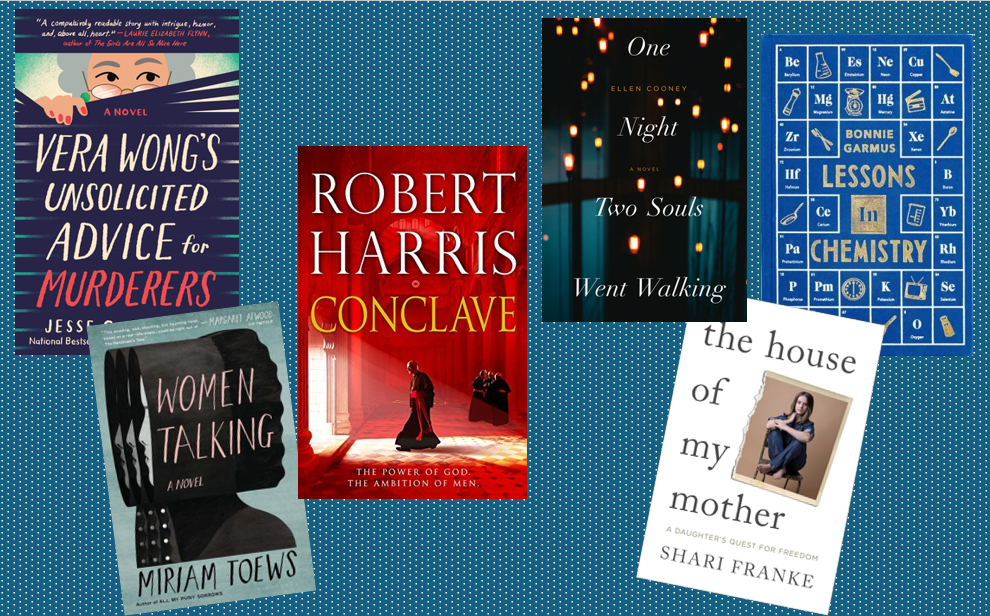
First up, I finished The Personal Librarian by Marie Benedict and Victoria Christopher Murray, which I was reading on New Year’s Eve last year and is included as my last installment on my 2023 list.  I guess this proves that I’m not above fudging the rules!  This novel tells the story of Belle da Costa Greene, the African American woman who took on a white identity and became the librarian for J.P. Morgan’s world-class book collection.  Her legacy is the amazing Morgan Library in New York City, which we visited after Christmas last year. I got the book in the gift shop and read most of it in one sitting on New Year’s Eve. The writing and plot are strong enough, but it is the story itself that fascinates, especially after being there. I still give it 5/5 stars.

Next, Every Note Played by Lisa Genova, a novel about ALS, music and relationships written by a neuroscientist.  There were several interesting elements to this book, which I found while browsing at our amazing public library, including the impact of music on disease and the ways in which terminal illness impacts family dynamics.  The characters were well done and it was a quick read, but it did have a bit of a PSA feel to it.  4/5 stars.

Gun Fight by Ryan Busse: I read this memoir for a project I’ve been involved with.  It is an insider’s view of the dramatic changes that have happened in both the NRA and the gun industry over the past few decades.  I was actually searching for another book about advertising in the gun industry and this was the “closest” I could find.  It gave a slightly different perspective compared to the elusive book I was looking for, but I found it worthwhile. It is always fascinating to learn how people completely shift their life’s perspective but I felt it could have been shorter by about one third: 4/5 stars.

I got Last Seen Wearing by Hillary Waugh at the Library of Congress’s bookshop this summer when we were in Washington to drop off our daughter for a summer internship. It was part of the Library of Congress Crime Classics series and was described as “one of the first-ever police procedurals” and “an American mystery milestone.” Written in 1952, the book served as a glimpse into American life at that time, which was intriguing to me, but the main appeal was having purchased it from the Library of Congress, one of the most amazing and beautiful institutions in our country.  For a modern reader, it may be a bit predictable, so I give it 3/5 stars.

I had been wanting to hear John Pavlovitz speak for quite a while, so I was excited to finally go to one of his events, which is where I bought his book, A Bigger Table.  John’s speaking event was amazing, as are his ongoing essays published on his website and social media, but I felt the book was longer than it needed to be and had more of a traditionally Christian focus than his broader, inclusive material of recent years.  It’s definitely worth reading but some people may want to skip some of the long-winded sections, as I did. 3/5 stars.

The Glass Castle by Jeannette Walls was one of my Hurricane Helene books.  During a week with no power and spotty signal, a friend and I swapped paper books, old school style.  I had heard an interview with the author of this fascinating memoir several years ago, so I was glad to read it.  Surprisingly, I found it even better than I was expecting.  It was nuanced, vivid, compelling, hilarious and heart-breaking.  I give it a strong 5/5 stars.

During those candle-lit days in the aftermath of the hurricane, I also re-read one of my all-time favorites. The Hero’s Walk by Anita Rau Badami will always have a place of honor on my bookshelf. It was gratifying to realize that years after I first read it, this novel still has the power to transport me to other countries and continents and into the hearts and minds of people who are fundamentally different from me on many levels.  This is the story of an Indian father’s  regret and his Canadian granddaughter’s emergence from a cocoon of loss, with striking side stories along the way. 5/5 stars.

With The Invisible Life of Addie LaRue by V.E. Schwab, we are entering into books connected to an epic trip my husband and I made to Ireland, England and Scotland in the fall.  This was the book I selected to read on the train after getting a tip from author Jodi Picoult on BookTok.  The final stop of our trip was Edinburgh, which is when I finished the book and read the author’s blurb saying she lived in Edinburgh!  This time-traveling novel does a better job than most of its genre in making sense and creating a connection with the protagonist. The plot and characters were strong and it was definitely a page turner.  5/5 stars.

The Dictionary of Lost Words by Pip Williams came to my list in an interesting way.  It’s been on my radar for a while and I had even read the Kindle sample, which somehow gave me the impression that it was speculative fiction, set in an alternate, perhaps Dystopian reality.  The idea that the Oxford English Dictionary was composed in a shed using scraps of paper seemed too far fetched to be reality.  After visiting Oxford, though, I decided to go for it and quickly realized this book is indeed well-researched historical fiction.  I completely enjoyed The Dictionary of Lost Words, especially since I could identify a little bit with the real-life Oxford. At times the steamy parts seemed a bit forced but that’s a small detail.  It has a wonderful protagonist and the plot had some gratifying twists and turns.  5/5 stars.  

I decided to follow up my first experience with Pip Williams with another of her books, The Bookbinder.  This story overlaps and interacts with the events and characters of The Dictionary of Lost Words, and I think it must be difficult to maintain continuity and develop independent characters in scenarios like this.  In some ways, this book’s characters seemed even more authentic as the story traced the arc of a lower class “town” girl who had to balance her love of reading with her job of efficiently binding books for the “gown” community.  In other places, the writing felt rushed and lacking depth, as many sequels are (in my opinion).  I still give it 5/5 stars.

Luckenbooth by Jenni Fagan was the last memento I purchased as we were leaving Scotland and it is set near the hotel where we stayed.  In fact, the restaurant of the hotel is called Luckenbooths, a fact that went over my head until I read the book.  This is definitely the most unusual book I read this year and could be one of the most unusual books I’ve ever read as it deals with the supernatural and real consequences of a deal made by the devil’s daughter.  It is episodic in nature, with little continuity throughout the history of the tenements known as Luckenbooths. It’s not an easy read but the stories were compelling and the devil’s daughter is quite memorable.  Give it a shot if you’re looking for something different! 4/5 stars.

Finally, to commemorate the Irish leg of our trip, I chose a Christmas themed Irish novel to end the year.  The Time of the Child by Niall Williams is set in 1962, which happens to be the year I was born, so I felt a connection with the “child” of the title.  I didn’t realize it, but it is part of a collection of novels revolving around the inhabitants of the coastal town of Faha.  It is a quiet, character driven book that I heard about via an NPR review.  I myself write this type of fiction and bristle when readers find my work “too slow,” but I have to say that at times this book was way too slow. In fact, I think it would be much stronger as a novella.  Still, I enjoyed this little peek into a unique time and place and I especially enjoyed the primary protagonist, Dr. Jack Troy, who embodied such humanity and compassion.  He takes his place among characters who struggle to do the right thing, even when it’s hard to figure out what that is. These are my favorite characters.  I would rate the first half of the book a 2 and the second half a 5, for an overall 4/5 stars.

~~~

It’s getting to be late afternoon and time for me to go.  I hope you enjoy the review.  Let me know what books you recommend and have a Happy New Year!

* My shortfall of books is partly due to the fact that I was laser focused on pulling my weight as part of a bigger effort to move my very red county a bit closer to purple. Despite the horrendous top ticket result in this year’s election, I’m happy to say we accomplished this goal in spades!!  In fact, our county had the biggest shift in the whole state and was in the top 20 county shifts in the country. We’re recharging now and gearing up for 2025.

Posted in Uncategorized | Tagged , , , , , | 2 Comments

I’m speaking out while I can

This is a ritual I never want to repeat.

And, one way or another, I probably will not.

Four years ago, I wrote a post on the eve of the presidential election, and I did the same thing four years before that in 2016.

I knew that it would probably not have a material effect, but I felt compelled to at least be on record as taking a stand against a would-be autocrat.  This is part of what I wrote:

Sometimes I wonder how I would have acted if I had been an adult during the Civil Rights era.  Or if I lived under NAZI occupation.  Or during the Civil War. It disturbs me to think that if I hadn’t had the advantage of growing up with modern, forward-looking influences in my life, I could have landed on the wrong side of history. But thankfully I did have those influences and now that I find myself facing a similar situation, I have an opportunity and responsibility to use my voice and privilege to do what is right. 

If I felt compelled to speak out then, today I am even more resolved to crawl over broken glass if necessary to say the same thing, only louder: Donald Trump is a clear and present danger to the United States and everything we stand for.

I know I don’t have a lot to add to the conversation about Trump vs Harris. Undecided voters probably don’t care what this blue-leaning quirky suburban mom thinks, but maybe they will pause when the former chairman of the Joint Chiefs of Staff under then President Donald Trump, Mark Milley, says that Trump is “a fascist to the core.

They may not care what I think, but maybe they will listen to John Kelly, Trump’s longest-serving Chief of Staff, a decorated general & Gold Star father of a son killed in Afghanistan. If he says Trump praised Hitler, met the definition of a fascist, & would govern like a dictator if allowed—maybe they will believe him.

They may not care what I think, but maybe the fact that 40 out of 44 of Trump’s own cabinet members have also sounded alarms will get their attention.

They may not care what I think, but maybe they will look into why more than 700 retired national security leaders broke tradition to speak out to warn us about a candidate who has “heaped praise on adversarial dictators like China’s Xi Jinping, North Korea’s Kim Jung Un, and Russia’s Vladimir Putin, as well as the terrorist leaders of Hezbollah.”

They may not care what I think, but I hope they care about what Trump himself says as he admires dictators and threatens to export citizens—not to mention immigrants—and promises to imprison journalists and anyone else who is vocal in criticizing him.

I could go on, but there’s no point.  If these facts don’t sway a person, nothing will. 

Instead, I will offer two observations. 

First, as I am writing this, Trump is holding a rally in Madison Square Garden, with eerie callbacks to the 1939 Nazi rally at the same location. He has not spoken yet, but his surrogates are already ramping up the hate-filled racist and misogynistic rhetoric, starting with calling Puerto Rico a “floating island of garbage.” 

As others have pointed out, there is no strategic reason to hold a rally in New York.  It is instead designed to sow discord and fuel violence.

Second, this morning I read Heather Cox Richardson’s daily post, which was made up almost entirely of quotations from a 1945 US Department of War pamphlet on “Fascism.”

Here is an excerpt from this WWII pamphlet explaining how fascism could one day take over in America:  

First, they would pit religious, racial, and economic groups against one another to break down national unity. Part of that effort to divide and conquer would be a “well-planned ‘hate campaign’ against minority races, religions, and other groups.”

Second, they would deny any need for international cooperation, because that would fly in the face of their insistence that their supporters were better than everyone else. “In place of international cooperation, the fascists seek to substitute a perverted sort of ultra-nationalism which tells their people that they are the only people in the world who count. With this goes hatred and suspicion toward the people of all other nations.”

Third, fascists would insist that “the world has but two choices—either fascism or communism, and they label as ‘communists’ everyone who refuses to support them.”

It is “vitally important” to learn to spot native fascists, the government said, “even though they adopt names and slogans with popular appeal, drape themselves with the American flag, and attempt to carry out their program in the name of the democracy they are trying to destroy.”

While Richardson doesn’t refer to it here, another hallmark of fascism is intimidating the free press.  In 2020, the illustration for my blog was the opinion page of The Washington Post.  This year, for the first time in almost forever, The Washington Post bowed out of endorsing a candidate due to fear of retribution.  Thankfully, the New York Times did not follow suit and instead took the baton to publish the editorial above. Their writers urge Americans to “Believe Him” when Trump says he will “prosecute his enemies, order mass deportations, and use soldiers against citizens.”

In 2016, when I first performed this bizarre election ritual, I was in a more hopeful place. I wrote that “my country is still a country that welcomes immigrants.  We still value ALL PEOPLE, male and female, White and Black and everything in between, Christians and Muslims and Atheists.”

I was so confident we would reject this man. I never imagined that so many Americans would pull the lever for someone who meets the 1945 definition of a fascist. 

I hope to God I never write another blog like this again. I hope people do indeed “believe him.” And I hope they speak out and show up.

I am done with this ritual.  

Posted in A Purple State | 2 Comments

Three Refreshing Finds for a Purple State of Mind

UPDATE: When this was originally written, I didn’t know the catastrophic impact Hurricane Helene would have on Western North Carolina, resulting in over 200 fatalities and the loss of an untold number of homes and other properties. Please keep the people of our region in your thoughts and prayers and if you are moved to do so, please donate to World Central Kitchen or one of the organizations listed on this link from UNC. Also, please know that federal and military aid has played a huge role in helping our region. The continuing flood of misinformation from radical right-wing sources saying otherwise is false. FEMA and national guard units are working hard and deserve our thanks. I live near the airport and hear their planes and helicopters throughout the day, bringing vital support to vulnerable communities. I personally know a handful of people who have benefited from FEMA already. For more on the disinformation surrounding relief efforts, see this explainer from the Charlotte Observer.

The original post from September is below:

As I’m writing this, Western North Carolina is bracing for Tropical Storm Helene to make its way from the Gulf to the Blue Ridge, bringing all sorts of weather mayhem. People are acting a little crazy—making last minute grocery trips, getting gas, and filling up water containers. 

But Helene is not the only storm we’re dealing with here in Purple North Carolina. Day and night, we are being bombarded with a whirlwind of politics as Team Red and Team Blue fight it out.

The swing states are getting all the attention at the moment, and the deluge is intense.

When we came home from vacation last week, we had a mountain of political mailers waiting for us. On any given day, I get a dozen or more political texts. Since we still have a landline (I know!), we also get calls day and night. Radio ads, TV ads and streaming ads are nonstop.

The constant barrage makes it difficult to think sometimes, but tuning out is not an option, not when vulnerable communities are at risk.

That’s why I’m happy to share three great finds that have eased my Purple State of Mind, three little bits of sanity and reason and common sense that stand out among the hyperbole and frenzy.

First Up: An Unaffiliated Candidate Who Doesn’t Talk Politics

District Court Judge Lora Baker is that rarest of finds in North Carolina, an unaffiliated candidate. She wears this badge proudly—her campaign slogan is “Unaffiliated. Unbiased. Uncompromised.”

Last year, Judge Baker was appointed to complete an unfinished district court term and now she is running to keep her seat for a full term.

It’s not easy to run as unaffiliated.  Judge Baker had to collect more than 2700 signatures just to get on the ballot, but she says it is worth it because “politics has no place in the courtroom.”

Refreshingly, Judge Baker does not comment on political hot topics because she is strict about following the guidelines of the Judicial Standards Commission. Instead, she emphasizes that she cares strongly about civil rights, civil liberties and the constitution. “I care about people and try to treat everyone with respect. I think that I am even tempered, and I want everyone to feel heard, to get a fair day and a fair shake. Equal access to justice is important to me.” 

It’s been an honor for me to help Judge Baker’s campaign with communications, and I can attest to her meticulous commitment to fairness.  Her website is www.bakeronthebench.org. She is also on Facebook and Instagram as Baker on the Bench. If you feel inclined, please share the word!

Next: A Local Group Focused on Common Ground

I was very happy recently to discover FIVE HIVE, a nonpartisan coalition with the goal of stopping harmful extremism in Henderson County.  They curate information about five radical right-wing candidates whose politics are scary and completely out of sync with the majority of North Carolinians, no matter what their political party.

Unfortunately, there are still plenty of voters who haven’t even heard of some of these candidates.

The group has a website and Facebook page run by five anonymous “Bees” from a variety of backgrounds—evangelical Christians, suburban moms, business leaders, etc.

The Bees’ common ground is formed by five issues that transcend politics. They believe—rightly I think—that almost everyone wants excellence in education, sanity in reproductive health, sensible gun legislation, responsible environmental stewardship and a stable and fair democracy.

One of the things I like about FIVE HIVE is their effort to stop “Robotic Voting.” According to the website, “Robotic voting equals giving your vote to a person or group whose intentions may not be obvious. Please learn about the candidates for these crucial races, use discernment and remember that in America, voting is a sacred duty, not to be taken lightly.”

Their website has a fun bee theme that makes it easy to read. Each “Bee” gives an up-close-and-personal assessment of one of the five alternatives to these candidates, which offers authenticity.  Check it out: www.fivehivenc.com or their facebook page is here.

Finally: A Donor Giving Platform that is Data-Driven and Discreet

As a blue dot in a red county in a purple state, I have been looking for a good resource for political giving for years, and I think I finally found it at OATH.VOTE.

While I happily support local candidates, I believe it’s even more important to be strategic with financial giving so that I am doing everything I can to protect democracy in our country as a whole.

For me, this means looking for races that are high stakes, competitive, and in need of money.  Serendipitously, this is the exact algorithm OATH.VOTE uses to rate candidates.

While the first two factors are fairly easy to determine, the last one can be difficult.  And it’s even more difficult thanks to sophisticated advertising that promotes candidates with little chance of winning.  The classic example is the 2020 Amy McGrath/Mitch McConnell race in which McGrath raised almost $100M only to lose by 20 points.

OUCH.

While McGrath was a compelling figure and the stakes were high, the race was never competitive. Maybe people could ascertain this and still wanted to give her a chance, but what was difficult to see at the time was that McGrath had more money than anyone could spend effectively. Meanwhile, candidates in high-stakes, competitive races didn’t raise nearly as much cash.  Who can say what the outcome of the US Congress would have been if money had been directed more strategically?

Plus, who wants to “set your money on fire” as the folks at The Connector describe it.

OATH.VOTE gives an impact score for key races up and down the ballot all over the country.  Case in point: Senator Jon Tester in Montana.  Right now, he has a decent impact score because the race is extremely high stakes AND extremely competitive.  On the other hand, it’s not super high because OATH.VOTE estimates that he has 157% of the money he needs to run an optimal campaign.  Food for thought!

Another thing I like about OATH.VOTE is that you get to choose how they communicate with you.  More importantly, if you donate through their platform, they do not use ACTBLUE.  I think ACTBLUE is great in terms of convenience, and it’s great that now you can opt out of listing your phone number.  BUT after years of using it, my information is still being passed around to all sorts of candidates and some pretty terrible PACs.  Many of the PACs use negative, predatory marketing techniques. (WHAT CAN I SAY TO CONVINCE YOU?!?!?!  I’M BEGGING!!!!) Some of these groups have been described as scams and are so off-putting, at times I have questioned the intentions of ACTBLUE. (It’s not that crazy!)

OATH.VOTE is straightforward and data driven.  It also occasionally highlights nonpartisan races and unaffiliated candidates.  For anyone who wants to financially support a stable and healthy democracy, it’s definitely worth a look.     

Posted in Uncategorized | Tagged | Leave a comment

There’s No Such thing as NOT Voting, Part 2

“North Carolina is the purple state to watch this year.”—Chris Cooper, Western Carolina University professor,  for the London School of Economics & Politics.

In 2024, North Carolina continues to hold its unofficial title as the Purple-est of Purple states, with all types of political scientists echoing Dr. Cooper’s observation that it is a key battleground that could tip the whole election one way or another.

To me, this means one thing: in North Carolina, there is no such thing as not voting.

NC voters don’t have the luxury of casting a protest vote for a candidate who has no chance. They can’t let things slip up on them, like not learning about new voting laws. They can’t forget that in a Purple state, every vote that is not cast is still a vote—a vote for the winner.

I’ve lived in North Carolina for more than 30 years now.  As a progressive voter, I’m both thankful for and mindful of the responsibility I have as a voter in a state where every vote counts. It was thrilling when North Carolina helped put Obama in the White House, and it was devastating when we were the very last state to be called for Trump in 2016. 

This year, I’m equal parts anxious and hopeful.

I’ll start with the anxious part. In 2022, some Purple states edged toward Blue, but North Carolina did not. After a painfully disappointing evening, we ended up with a senator who votes in lock step with Marjorie Taylor Greene and a state Supreme Court that wasted no time in reversing the previous court’s pro-voting rights decision.

Now that the 2024 election is here, NC Republicans are running people who are perhaps the most rabidly extremist right-wing candidates in recent history. They are so extreme, their primary opponents decline to endorse them and the conservative leaning state Chamber of Commerce has sounded alarm bells.

For a Purple state that has widespread support for progressive policies, candidates such as these should be completely dead in the water.  So, this could be good news.

Or it could be terrible.

One reason Mark Robinson and company have a chance of winning in spite of the state’s overall composition is because progressive voters are not as likely to vote as conservative voters.  In particular, young voters, who skew progressive and are trending even more left in ideology, are less likely to vote than older voters.  In 2022, voter turnout was up as a whole but this group’s participation in voting actually declined from 2018, the previous midterm election.

Since 2024 is a presidential election, progressive turnout will undoubtedly be up, but I still see red flags. Progressives are understandably upset about the lack of progress in several arenas and especially the GAZA tragedy.  Many are not excited about a presidential candidate over 80. They may not be familiar with down ballot races–I haven’t seen supporting evidence, but I believe that conservatives are more likely to vote straight party without thinking, all the way down the ballot, while progressives tend to hold off unless they know the pros and cons of a race.

That’s admirable, but again, in a Purple state, there is no such thing as not voting.

The hopeful part of me sees that changing demographics are strongly in our favor. Some have argued that today’s right-wing extremism is largely a reaction to the relentless shift in demographics away from a conservative, white majority to younger, more diverse citizens.

Perhaps more importantly, there’s an undeniable uptick in energy and a palpable sense of urgency among progressive voters.  Throughout the nation, special elections have gone better than expected for Team Blue, and in North Carolina, the state Democratic leadership is young and on fire. They’ve set clear goals about supporting rural counties, targeting young voters and addressing organizational problems, and they are well on the way to meeting them. 

Finally, while young voters continue to have worse turnout than older voters, the trend for young voter participation is good. It’s especially exciting to read that North Carolina ranked  No. 7 in terms of the potential impact of the youth vote on its elections.

I understand that if you’re reading this, you probably don’t need to be reminded about the importance of voting in every election and in every race.  But maybe some of the people around you do. 

Maybe you know a college student who has a million things going on at school.

Maybe you know a neighbor who is discouraged by the MAGA chaos and noise. 

Maybe you know a colleague who just registered but is intimidated by the idea of going to the polls. 

President Biden has said that “From the very beginning, nothing has been guaranteed about democracy in America. Every generation has had to defend it, protect it, preserve it, choose it.”

I think it’s up to us–the Purple state voters who realize what the stakes are–to internalize this quote. Our role in defending democracy could be to let other people in our lives know what it really means to not vote. It’s up to us to share the idea that in a Purple state, people are either voting for the candidate they choose on the ballot, or they’re voting for the winner.

In a Purple state, there’s no such thing as not voting.

Posted in A Purple State | Tagged , , | Leave a comment

A Purple State of Mind Installment No. 2

An open letter to progressives in Blue States

Dear Fellow Progressives:

Once a month or so—whenever a Red State makes the news for a particularly outrageous incident—I’m bombarded with posts that go something like this:

Really, Florida? Banning the inaugural poet? I’ll NEVER set foot in your state until you stop electing idiots, and I used to love vacationing there!

Well, what do you expect from Mississippi? It’s a state overrun with racists and nutcases. Why any non-MAGA person would live there is beyond me.”

Looks like it’s time to boycott North Carolina again. The same people who elected Jesse Helms are at it again.

I may see a little pushback to these posts, but for the most part people pile on.

Big time.

This blame-a-red-state-game appears to be quite an amusing activity.

Our beloved rural communities in red states deserve not to be abandoned.

Maybe take a minute?

As a blue dot in what I consider to be a wonderful purplish-red state, I’d like to pose a question to my fellow progressives who are writing these comments: Deep down, do you believe that derision and ridicule are helping us move our states forward? Are the many rural communities that make up Red States not worth the fight?

I can only speak for myself, but I can tell you how these comments make me feel, and that is demoralized, belittled, and unappreciated.

I’m guessing the folks who live in solid liberal enclaves don’t actually want progressives in Red States to call it quits. At least I hope this is the case. So, if I may be so bold, I’d like to offer a few things to think about before pressing the post button:

  • Remember that, unlike Vegas, what happens in red states does NOT stay in Red States. If Democrats lack a convincing majority in the US legislature, our country will have a hard time putting guardrails back in place to protect our whole democratic process. That means every state counts. Beyond that, pollution doesn’t recognize state lines. Neither does an easily obtained gun. We’re all in this together.
  • Consider that we blue dots in a red sea are quite possibly working harder than you. In my small, rural, ruby red county, the Dems are working as if democracy is on the ballot (spoiler alert: it is). We have 600+ active volunteers who keep the office open six days a week, host events, and support our candidates. We can have a hundred show up at the monthly breakfast. We had the largest contingent in the July 4th parade and a Labor Day parade that was out of this world. And that’s just the Dems—our county has other progressive groups, too, and we’re all working hard, making slow progress to turn the tide.
  • Ask yourself how progressive your state might be if the GOP had been lucky enough to grab control at a key time and gerrymander it to the degree Ohio or North Carolina is gerrymandered. Take a look at Democracy Docket’s great explainer on the effect of gerrymandering: Gerrymandering Deep Dive: North Carolina. Could this be a “there but for the grace of God” type situation?
  • Think about demographics. Many Red States have large African American and/or LatinX populations. Is it possible that your shaking-the-dust-off-your-feet approach could come across as a little racist to them?
  • Recognize that blue dots in red states must work within a coalition that includes people who have voted Republican in the past. Some of these people consider themselves conservatives in a traditional sense of the word. Vitriol, sarcasm, and snobbishness from SOME liberal voices could easily sour their opinion of ALL liberal voices. Don’t bulldoze what we’re building.

Postcards to Voters is just one way to encourage rather than discourage progressives in Red States.

What you COULD do instead

For suggestions, I’m going to start BIG.

I’ve noticed that some people criticizing red states go so far as to argue that progressives should simply pack up and leave, but if progressives in red states took the advice to leave, those states will only become redder. More importantly, if progressives in purple states followed that advice, the country’s situation would get much worse, not better, as states like Georgia are taken out of play.

I would suggest the opposite of abandoning ship—more progressives should move from blue states to purple states where their votes will make a difference. California and New York and Maryland don’t need you—North Carolina and Georgia and Ohio do. Plus, we have amazing progressive cities, our cost of living is generally good, and work-from-home arrangements make it possible for people of many professions to join us.

While a fast influx of progressives moving here would be nice, I’ve been told by many, many people that my incredibly wonderful idea is not so incredibly realistic. Not to worry! I have other less grandiose ideas about how our Blue State Friends can help our situation:

  • Look for a social media account from a progressive person or group in a red or purple state and follow them to amplify their message. Comment on what they’re doing. Like their posts. Repost their news. The more interaction they get, the more their posts will be seen. It’s like free advertising!
  • Instead of taking potshots about the politicians who have managed to grab power, offer encouragement to the people working for change. In other words, instead of posting something like “Can you believe the losers who elected this nutcase?” post something like, “I know there are many people in the state who do not support this crazy person. We’re pulling for them to turn this situation around!”
  • Jump in and stand up for us. When you stumble upon a post that carpet bombs a state or region, speak up. Point out that progressives exist in every state and the ones in red and purple states could use support, not mockery.
  • Be on guard for signs that outside groups are stirring the pot. I’ve seen credible evidence that several divisions within the progressive community have been artificially created, and I’ve seen several posts that I believe fit this category.
  • Check out the group Postcards to Voters to send reminder notes about pivotal races in a fun, non-judgmental way. This is the group I personally use because they do such an amazing job vetting campaigns to find the ones where postcards will be most effective, and they vet their messaging, too. It’s easy, and every point of contact makes a difference.
  • Make a donation to a group that is working to repair the damage—the democratic party in a pivotal county, for example, or the ACLU or any number of groups bringing legal action to protect voting rights and other Blue Values.

So that’s my list. I made it, so of course I think it’s great. But I’m interested in what other people have to say. We blue dots can use all the help, encouragement and support we can get to realize our potential.

Share your ideas!

Sincerely,

A Blue Dot in A Purple State of Mind

(PS, I predict at least one person thinks public shaming is still the way to go.)


(PPS, progressives moving to purple states will always be my favorite idea!

Posted in A Purple State | Tagged , , , | Leave a comment

Forget ringing, I’m READING IN the NEW YEAR!

It’s one hour and 40 minutes until 2024 begins and I’m reading my 16th book of the year while the animals snooze by the fire and a candle sends cedar aroma throughout the house. 

There are worse ways to ring in the New Year. 

Next year, maybe I will read more than 1.33 books per month.  Who knows?  In any case, these last few minutes seem like a good time to review my books of the year.  Here they are:

First up, I finished the last two of Hilary Mantel’s Wolf Hall trilogy.  While I had a few issues with the ambiguous narration, the perspective and insight into Thomas Cromwell had many moments that have stayed with me throughout the year—the yearning for connection, the ambition, the fatalism, the touching moments of family life, and always the trick of dealing with the danger of serving the unstable and powerful Henry VIII.  4/5 stars

I followed with a modern times Mantel book, Beyond Black, about an English psychic who is haunted by not only her own ghosts, but the ghosts of others.  It held my attention and had endearing moments, but could have used a little more editing.  3/5 stars.

I read all three of Philip Pullman’s His Dark Materials series.  This was my biggest disappointment.  Of course I knew it was children’s literature, but it seemed unnecessarily formulaic, which was surprising after all the consternation about how radically “dangerous” these books are.  I honestly have trouble remembering much more than polar bears and portals between worlds and a nefarious plot to harm children.  2/5 stars

Fun fact: I got my last book of the year

at The Morgan Library & Museum

in New York City

The Midnight Library by Matt Haig was pretty entertaining and well constructed, but a wee bit predictable in spots.  Vibes of “It’s a Wonderful Life” and “The Twilight Zone.” But fun and easy.  4/5 stars.

Under the Banner of Heaven by Jon Krakauer is part of my ongoing exploration of Cult Books.  By Cult Books, I don’t mean books that are cultishly popular, I mean books about cults.  I find this genre strangely comforting, as in “I may be totally messed up but at least I’m not in a cult!” This particular book is about a breakaway sect of Latter Day Saints, aka Mormons, and it is WILD.  4/5 stars.

The Violin Conspiracy by Brendan Slocumb is a fun Who Done It and is also a first novel by a musician from NC, which endears it to me quite a bit.  Nothing earth shattering and it’s hard not to guess who did it, but still lots of fun.  4/5 stars.

The Other Boleyn Girl by Phillipa Gregory: my second most disappointing out of the lot.  It felt like it was trying too hard to be scandalous and really, hasn’t Anne suffered enough?  3/5 stars

Foster by Claire Keegan is a short introspective book featuring a lonely girl sent to the Irish countryside to live with a kind but odd couple.  I like quiet fiction, so I enjoyed it, but honestly it was almost too quiet for even me.  4/5 stars

Remarkably Bright Creatures by Selby Van Pelt was my break-out favorite. It’s much lighter and more feel-good than books I usually fall for. I’m not sure why I fell in LOVE with all of the characters, but I did, especially the cantankerous octopus held captive in the aquarium. The plot was perfect in my humble opinion. As always, your mileage may vary.  5/5 stars

The Lost Apothecary by Sarah Penner re-created a wonderful atmosphere in 18th century London where a woman has found it necessary to specialize in potions that offer quite illegal solutions to all sorts of problems.  The modern-day plot didn’t quite work for me, but it was still fun.  3/5 stars

Slaves in the Family by Edward Ball captured my attention since I am a native of South Carolina and grew up vacationing near the plantations featured in the book. Ball’s family was, in days gone by, one of the most significant slave-holding families in the country.  Against the wishes of most of his still well-known and respected extended family, he entered into a quest to find the descendants of their slaves and to determine if he is related to them.  (Spoiler alert—he is!)  While the story is fascinating, I think the book could have been half the length and held the reader’s attention better. 4/5 stars.

Tomorrow and Tomorrow and Tomorrow by Gabrielle Zevin was a gamble I chose based on a tip from social media, but I ended up liking it so much I gave a copy to my son for Christmas.  It is a novel about game designers and the meaning of creating games and what it means to PLAY.  At times it reads like a documentary, but it lifts into flight on several occasions and raises interesting philosophical questions. 5/5

And finally, The Personal Librarian by Marie Benedict and Victoria Christopher Murray is my book to ring in the new year, made even more special because I bought it in The Morgan Library in New York City.  It’s quite incredible to be in a space holding illuminated manuscripts, Gutenberg bibles, and the original manuscript of Dickens’ A Christmas Carol. It’s even more incredible to learn about the woman who helped create the library.  So far I’ll give it 5/5 stars. 

( It’s possible I have a few books left out–sometimes, especially with non-fiction–I’ll let a title hibernate for a while. And it seems that I had a library book at some point that I can’t recall. But this is close.)

I hope everyone adds a book to their reading goals for 2024.  I’m going to set my goal for 18, which—if my math still serves me—equals 1.5 books per month. 

I hope you have a literary and most HAPPY NEW YEAR!

Posted in Uncategorized | Leave a comment

A Purple State of Mind

Installment No. 1: There is NO SUCH THING as not voting

As a state, North Carolina is about as Purple as they come.  We’re the hottest of battlegrounds, the swingiest of swingers.

Voting is an important duty for everyone, of course.  But guess what? It’s even more important if you happen to live in North Carolina. 

I’ve lived here for more than 30 years now.  As a progressive voter, I’m both thankful for and mindful of the responsibility I have as a voter in this state.  It was thrilling when North Carolina helped put Obama in the White House, and it was devastating when we were the very last state to be called for Trump in 2016.

When progressives turn out, we win. Progressive policies such as expanding Medicaid and offering a social safety net for vulnerable populations are overwhelmingly popular.  More urgently for this moment in history, progressives form the bulk of a tenuous coalition that is safeguarding our democracy from toppling over into an authoritarian state. That’s why I don’t think I will ever understand why so many progressive voters only show up when the presidential race is on the ballot.    

Earlier this year, progressive-leaning young adults rushed to register to vote in our state, but it’s not clear that they are indeed voting. We have just a few days—hours really—left in Early Voting and as of October 28, Politico was reporting that in North Carolina, “Voters aged 30 and younger account for just 5.4 percent of ballots cast so far, compared to 16.5 percent of those who voted early or absentee in 2020.”

NC progressives who don’t cast a ballot are essentially voting for a Supreme Court that could wipe away women’s rights to privacy and choice.  They are essentially voting for school boards who have no problem banning books. They are essentially voting for a state legislature that could negate the Governor’s veto, unleashing 50s-era laws on everything from protecting clean water to controlling our flagship universities to limiting birth control. 

In other words, for progressives in a Purple state, there is no such thing as not voting.

Meanwhile, North Carolina’s Senate race is statistically TIED.  Cheri Beasley’s last political race—for Chief Justice of the state Supreme Court–was lost by 401 out of nearly 5.4 million votes cast, making it “perhaps the closest statewide race in state history.” (From the website ElectionsDaily.)  There are 100 counties in North Carolina.  If a handful—a literal handful—more progressive voters in each county had chosen to vote, she would have won. 

This year Beasley is running for Senate. Whether she wins or loses, the impact will be felt across the nation. 

As President Biden said on November 2, nothing is guaranteed about democracy. “Every generation has had to defend it, protect it, preserve it, choose it.”

I don’t have a huge following, but as a writer this is what I must do to defend democracy.  To my fellow progressives, to the newly registered, and to the conservatives and Republicans also upholding the pro-democracy coalition, I’m writing to ask you to please cast a ballot this year. If you’re in North Carolina or Georgia or Arizona or Pennsylvania or Ohio or any other Purple state, please do whatever it takes to overcome the obstacles and find a way.

Please make a plan to vote. Please vote for the judges, the state legislators, the commissioners, the school board, all the way down the ballot.

Please don’t let anything get in the way. 

And please take a friend.

Posted in A Purple State, Uncategorized | Tagged , , , , , , , , , | Leave a comment

Reading the Pandemic Part Two: Horror, Dystopia, Film, Text

Over the past week, I’ve stumbled across several essays that use slightly different words to make the same point as this aptly named article–GRIM, GHASTLY & GRUESOME–from the NY Times Review of Books. 

“Horror,” columnist Danielle Trussoni writes, “is a perfect genre for our current moment, one that offers a narrative architecture strong enough to hold the weight of America’s traumatic past, stories entertaining enough to keep our attention, and conflicts that allow us to confront our demons and defeat them.”

While I’m not a huge horror aficionado in normal times, I definitely turn to the genre at key moments and find that it offers all of these elements quite well.

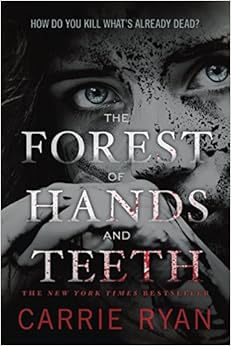
During a particularly gnarly phase of my usually boring life, I devoured Zombie fiction one book after another, finding special refuge in the Young Adult series THE FOREST OF HANDS AND TEETH.  Nothing else seemed to make me feel better than reading about the Undead.  It was both cathartic and riveting, escapist and inspiring.

More recently, during the early days of the pandemic, I didn’t turn to horror per se, but I became fascinated by stories of escape from insular fundamentalist cults—I started with the HBO mini-series UNORTHODOX and went from there—watching or reading, but preferably both. ONE OF US, BOY ERASED, LEAVING THE FOLD … while they don’t fit the horror genre in terms of slashers jumping out from dark corners, they belong in the category of real-life horror in that people are actually trapped in these systems right now.  In tale after tale, the protagonists showed that freedom can be attained but only at a heavy price and usually only with outstanding help.

And now here we are, with the 2020 ball cage spinning rapidly out of control as we are just about to fill up our apocalyptic BINGO cards.

The final days of the election are upon us.  I am in need of another horror distraction–NOW!!!! 

And what better distraction could there possibly be than THE most fitting and appallingly prescient creative work for this moment, Margaret Atwood’s THE HANDMAID’S TALE.

Since the spring of 2017, gobs of writers have pointed out the scary similarities between Trump’s America and The Republic of Gilead.  I won’t echo these other than to say that what seemed eerily predictive four years ago is screamingly evident in 2020. 

Putting that aside, what interests me most about Atwood’s story is viewing its underlying premise as depicted in the 1985 book vs. the 1990 film vs. the current Hulu series. I also can’t help but view all of these stories against CHILDREN OF MEN, another author’s treatment of the same premise, in book and film version. 

Continue reading
Posted in Uncategorized | Tagged , , , , , , | Leave a comment

Indeed, not normal at all

Sometimes I wonder how I would have acted if I had been an adult during the Civil Rights era.  Or if I lived under NAZI occupation.  Or during the Civil War. It disturbs me to think that if I hadn’t had the advantage of growing up with modern, forward looking influences in my life, I could have landed on the wrong side of history.  But thankfully I did have those influences and now that I find myself facing a similar situation, I have an opportunity and responsibility to use my voice and privilege to do what is right.

An autocrat is in power in this country.  Historians are telling us that he is following a predictable and dangerous path.  If he is allowed to continue, the unrest and inequity that’s occurred in the US over the past few years will look like nothing.

To the extent that I have a voice and followers on social media, I am going to do what I can to say loud and clear that this is not a normal election in any way, shape or form.  We are not choosing between policies.  The “both sides have issues” argument is moot right now. We are choosing between democracy and authoritarianism.

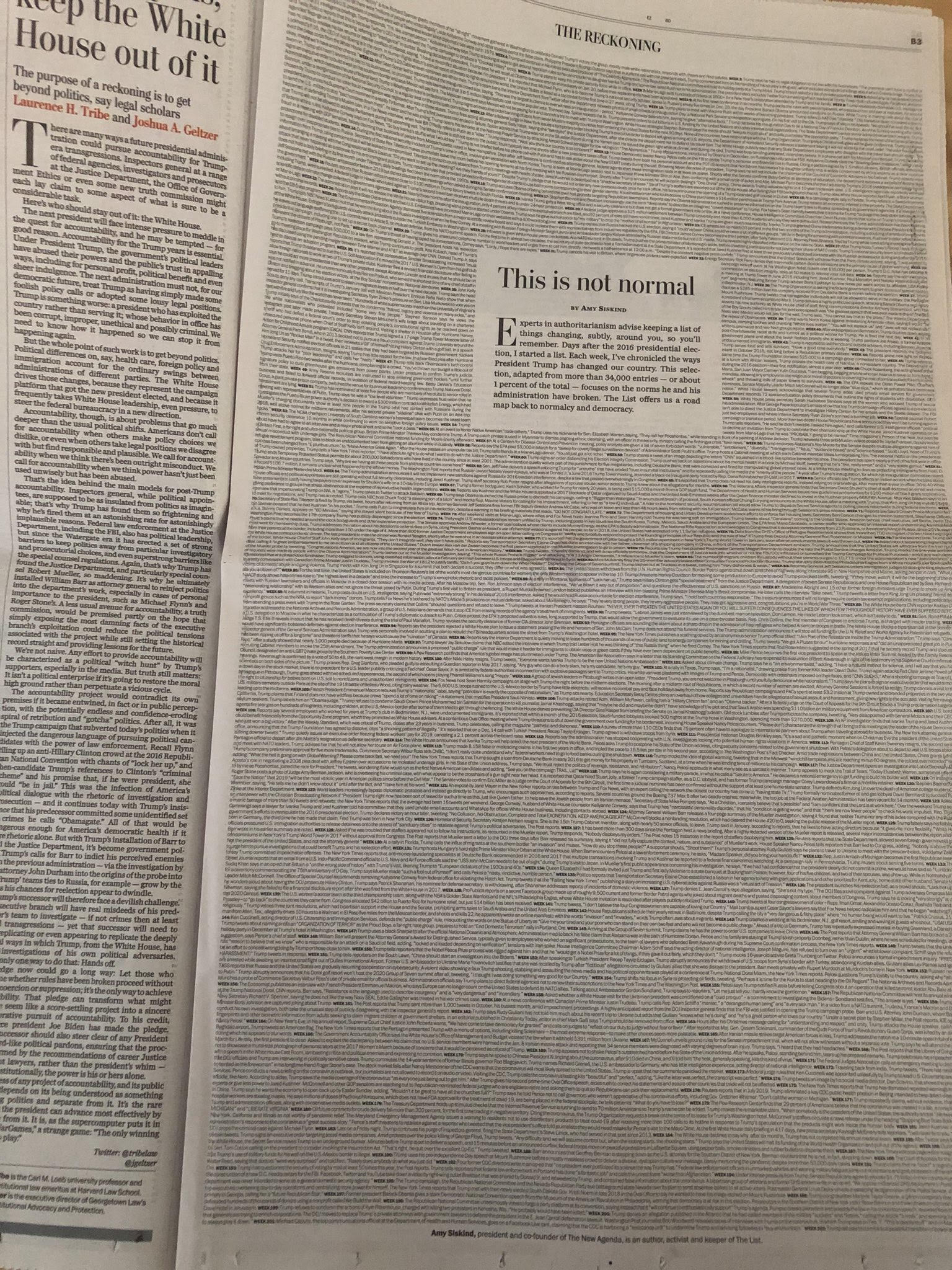
The Washington Post series in the photo is just one of many unprecedented attempts to enumerate just SOME of the abuses of power that have occurred under Trump—soliciting foreign interference in an election–using blatantly corrupt voter suppression tactics–inciting right wing terrorists to commit violence for his benefit–allowing Russia to place bounties on our troops–praising dictators–bragging about assault on women–evading taxes and stealing tax payers’ and donors’ money for his family’s personal gain–slandering his opponent’s only surviving son–attacking people with disabilities and people with addictions and refugees and anyone else who is vulnerable–using religion as a cover for his power games—taking babies from their mothers at the border–abandoning our defenses against a deadly pandemic—doing everything possible to take away basic health care coverage.

THIS IS NOT NORMAL.  It will take an uncomfortable coalition to stop it.  I respect the Lincoln and Eisenhower and McCain Republicans who are crossing party lines to stop this.  I am grateful for the left-wing progressives who are voting more centrist than they’d like in order to stop this.  We need you and we need even more!

I know I will not influence many people but I am asking everyone to please vote against the criminality and corruption that has taken over our government. I could not live with myself if I did not speak out. This is not normal.  This is not right.  

Please share.

Posted in Uncategorized | Tagged , , , , , , | Leave a comment

Reading the pandemic: How fiction informs 2020

I don’t pretend that I’m capable of following all the chaotic plot twists that we’ve lived through during the last 46,000 months of the Trump administration.  I’m not nearly that wise.  BUT I am a reader and that gives me at least one advantage—while many people are tempted to join in the melee in the center of the room, I can sometimes retreat to my little corner and happily hypnotize myself with my new shiny question that is called

WHICH DYSTOPIAN NOVEL DO WE MOST RESEMBLE RIGHT NOW?!?!

Yes indeed.  I have a nice little diversion going on due to the fact that fiction does double duty as a massive crystal ball.  And over the centuries various pieces of writing have somehow predicted almost every single nuanced bit of anarchy that 2020 has thrown at us. 

Plague, authoritarianism, inequality, unrest, fundamentalism, technology run amok—it has been written.

Let’s take a dive and look at a few examples. 

Continue reading
Posted in Uncategorized | Tagged , , , , , | 1 Comment