The Power of Small Things, guest post by Elizabeth Jennings, author of THE BUTTON COLLECTOR

Delighted to be the guest of Lasesana!

lasesana's avatarlasesana

button_final_1Elizabeth Jennings, author of THE BUTTON COLLECTOR

Years ago, I began writing a novel based on a family’s collection of discarded buttons because I liked the idea of small, tangible items telling stories that weave together to form a larger truth.

At the time, I had no idea how many button aficionados exist in this world.  Or how devoted they are.  Or talented.  Or insightful.  Since then, I’ve come across countless button jewelers, button crafters, and button florists who create objects of beauty ranging from whimsical earrings to festive bridal bouquets.  I’ve discovered artists who transform buttons into complex, sophisticated mosaics, mandalas, and even sculptures.  I’ve become aware of clubs and organizations just for button collectors, including The National Button Society, which is made up of 3000 serious collectors who research buttons as historical artifacts.

Button fans, it would seem, are legion.  But beyond the hard-core button contingent is an…

View original post 724 more words

Posted in Uncategorized | Leave a comment

Blogs in the Time of Gravatars…

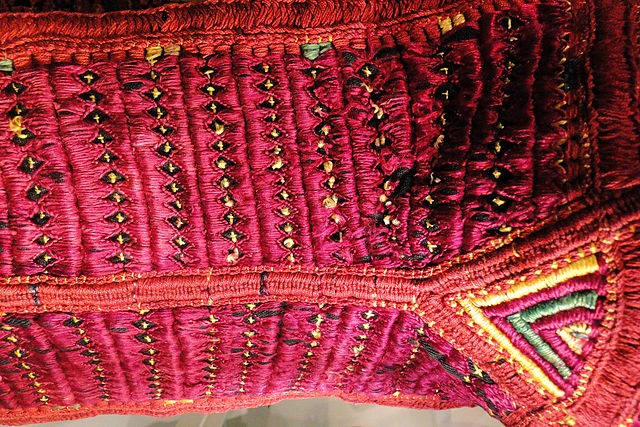
640px-Andean_Weaving_Museum_of_Anthropology_UBC_Vancouver

Public Domain Image of Andean Weaving, Wikicommons

One of the cool things about having a blog is looking at the stats to see how many visitors stop by and where they come from.  I did this yesterday and discovered that from October through April I’ve had more than 2500 views of my blog.  Visitors have come from 42 countries and five continents.

That’s pretty awesome.   Yay!

But then, hmmm. . . .

I noticed an irksome little detail.  You see, the two continents not represented are Antarctica and South America.

And while I understand why nobody from Antarctica has dropped by, what is going on with South America?  That’s a huge, hospitable continent with an ample supply of human beings.  Besides, we’re practically neighbors….Kind of.…Sort of.… At least compared to India, which sends me visitors almost every day.  And yes, I realize English is an official language in India, but I also get visitors from the Middle East and Asia on a regular basis.

So what is the deal?  Is my WASP-ishness such a turn off?  Is my lack of Latin flair that apparent?  Was it something I said?

As a big adherent of the Book of Pooh, I decided to think, think, think.  In particular, I tried to think of all the things I have in common with South American readers and writers.  That’s when I think I may have stumbled upon the problem—

Because, when I list all the South American authors I’ve read, I come up with a grand total of …..

Two–Gabriel Garcia Marquez ( Love in the Time of Cholera and One Hundred Years of Solitude) and Paulo Coelho (The Alchemist).

Two authors for 12 countries, 387.5 million people, 6.9 million square miles.

I hope memory is failing me.  I hope I’ve read more South Americans that I simply can’t recall off the top of my head.

The problem is, I’m pretty sure I haven’t.    And that annoys me.

A lot.

I consider myself well read.   I often gravitate to authors from other countries and cultures.   I have gaps like anyone else, but I’ve read books from all over Europe, Scandinavia, Mexico, Canada, Asia, the Caribbean, the Middle East, and Australia.

But apparently not South America.  And, to be honest, I’m also a bit sketchy when it comes to Africa.  (More on that later!)

For right now I have two goals:

One.  Entice a few South Americans to stop by . . . maybe I’ll learn to Tango!

Two.  Become more familiar with South American literature.  I’ve already picked out the first book I want to read—The House of the Spirits by Isabel Allende.  But I’m open to suggestions and I’d really love to find a South American Frame Tale.  (And, no, I’m not bending the rules to include Like Water for Chocolate, although I adore that book!)  Just drop by, pull up a chair, and share your favorites.

I’ll leave the light on for you.

Posted in Uncategorized | Tagged , , , , , , , , , , , , | 1 Comment

Button Flash 3: Afternoon Tea

Here’s the third entry in Flash Fiction, Button Style:  250 words written in one hour.  Thanks to Elaine T. for the sweet button photo!

Afternoon Tea

The girls ran into the parlor, swishing skirts, twirling ribbons.

“Beautiful!” they exclaimed as if on cue.  They picked up tea cups, played with sugar cubes, smelled roses.

In the corner, Adelaide suppressed a humph.  “I can’t believe you’re using china for children,” she whispered to Marie.  “Inappropriate.”

Marie didn’t say anything.

“In my day,” Adelaide continued, “tea was serious—not a children’s party.”tea button

The girls discovered a chest filled with hats, boas, gloves, jewelry.  “Look at this,” one of them laughed, grabbing an old fox stole.  “Aaack!”  another girl screamed, running across the room.

“Girls . . . settle down please,” a mom said above the din.  “That’s not how ladies act.”

“Humph!”  Adelaide could no longer hold it in.  “Ladies?  Look at those moms.  Wearing jeans to tea!”

Marie rolled her eyes but remained quiet.

“Look at me!”  The tallest girl had put on cat glasses, pillbox hat, silk scarf and pink elbow length gloves.

“That’s cute, Alex,” another mom said.  “Looks like Jackie O.”

Adelaide was fuming.  “She’s nothing like Jackie O and what kind of name is Alex?”

Finally Marie broke her silence.  “Girls, we’ll start tea in a few minutes–but how’d you like to play with this real Victorian china doll?”

She grabbed Adelaide and held her out toward the birthday girl — Alex.

“Awwww….” The girls said in unison, reaching for Adelaide with grubby hands.  “Look at that lace!  Look at those buttons!”

“Yes,” Marie said with a grin.  “She’s lovely, isn’t she?”

****

Do you have a button with a story waiting to be told?  Email an image of it to: ej@elizabethjennings.com.  For more information click on this link:  https://elizabethjennings.com/2013/01/10/flash-fiction-button-style/

Posted in Uncategorized | Leave a comment

A button is a little thing, but it’s a thing of use

A button is a little thing, but it’s a thing of use.

via A button is a little thing, but it’s a thing of use.

Posted in Uncategorized | Leave a comment

First listing for pre-order …. and second advance review!!!

Just a brief post with a few book updates:

Kobo, the independent e-book seller, now has The Button Collector listed for pre-sale.  Watch for listings on Amazon and Barnes and Noble, which will offer the book as paperback or an e-book, as well as iBooks.

The second advance review for The Button Collector was published this morning by knitncaboodle, a wonderful blogger who combines fiber arts and book reviews.

Finally, goodreads and LibraryThing also have my book listed.  Exciting times!

Posted in Uncategorized | Tagged , , , , , , | Leave a comment

Follow the Publishing Road ….

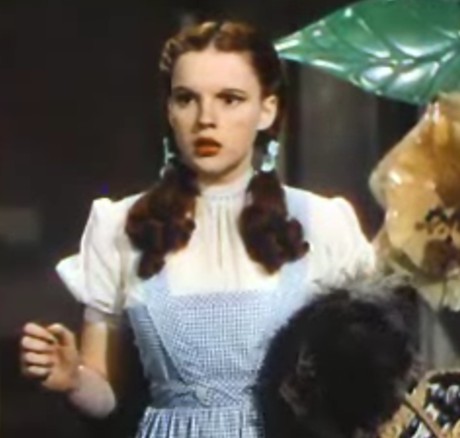
Judy_Garland_in_The_Wizard_of_Oz_trailer_2

Judy Garland in a public domain image from The Wizard of Oz (Wikimedia Commons)

In just over a month, my book will be out on its own in the big, wide Technicolor world, the thought of which fills me with equal parts terror and exhilaration.  Even though I’ve been a writer almost as long as I can remember and I’ve written a bit of everything—magazine features, ad copy, short stories—I’ve found that I’m still not quite used to this moment of revelation.  And when it comes to a novel—the culmination of years of work—the experience is a bit like being picked up by the tornado and dumped with a thud into Oz.  You have no idea what kind of reception you’re going to get when you step through that door.

That’s why I am thankful for three wonderful authors– Susan Vreeland, Ann B. Ross and Amy Willoughby-Burle–who took  time to read The Button Collector and write encouraging blurbs to accompany my book on its journey.  I’ll fight the temptation to call them good witches, but they are truly mentors for me and I will always be grateful.

Now my book is making its way through the land of advance reviewers, and again I feel like Dorothy.  Will these people I’ve never met find anything of value in my words?  Will they be kindly tin woodsmen willing to walk with me or ruthless flying monkeys swooping down, creating havoc?

Of course, they are neither.  They are readers.  Honest readers.  Honest readers with honest opinions . . . and preferences and histories  that might be very different from my own.  And, as scary as the prospect is, it’s those differences that offer the greatest potential .  Because I actually have a pretty good sense for how readers like me will view my book, but readers who are different in some way? Those are the people who can offer new perspectives and may even see things in my story that I overlooked,  just as Dorothy overlooked what she had on the farm.

On Monday, the first advance review for The Button Collector was published by Book Diva.  I felt deep relief when I read it and learned that one more reader found meaning in what I have written.  Beyond that, I was happily surprised that Book Diva focused on an aspect of the book that I had not paid a lot of attention to—the theme of thriftiness in terms of recycling and reusing both physical materials and memories.   This is an angle I like, one that adds depth to my more conscious design of repair and renewal through creative acts.

How awesome is that, to learn something about your own book from a stranger?

So now I wait for more advance reviews to appear, and I feel something in addition to weak-kneed fear and trembling. . . the almost pleasant anticipation of  things wildly unforeseeable.

Because, as I follow the publishing road—and-I-know-you’ve-been-waiting-for-this-since-you-started-reading-the-post—I’ve a feeling we’re not in Kansas anymore.

***

The Button Collector will be released May 6, 2013, by PageSpring Publishing’s Cup of Tea Books.  Read the complete endorsements by Susan Vreeland, Ann B. Ross and Amy Willoughby-Burle.  And be sure to visit Book Diva for her full review of this and other brainy, courageous, heart-filled books.

Posted in Uncategorized | Tagged , , , , , , , , , , | 2 Comments

Button Flash 2: My Sister’s Closet

Here is the second entry in my Flash Fiction, Button Style project.  250 words written in one hour.  Thanks to Katie W. for the button picture!

My Sister’s Closet

“We’re supposed to get a referral from Social Services,” the woman told Megan.  “But it wastes paper and time, so don’t worry about it.”  She unlocked the door and motioned Megan into the small room, lined with racks of women’s suits, blouses and dress pants, most in a dated matronly style.

flash 2 for Elizabeth Jennings The Button Collector

“What size did you say your friend is?”  the woman asked.

“Six.”

“We don’t have many sixes, but they’d be back here.”  She headed for the corner and began pulling items from a clear storage box.  “You can try them on for her if you like–you look like a six yourself.”

Megan felt her face flush.  The woman continued sorting through the clothes.  “How did you hear about us again?”

“I saw a flyer. . . . so when my friend had to leave her husband I thought you might be able to help.  She needs a job, but she had to leave everything behind.”

“Sounds like a bad situation.”

Megan didn’t say anything.  A shiny metallic button on a blazer caught her eye.  She stared at it, swept back to the feeling of walking into an office, all eyes on her, powerful.

“I’m glad we can help.  That’s why we call it My Sister’s Closet—women helping women, like sisters.”

Megan felt a catch in her throat.  Slowly she turned her gaze to the woman, noticed a name tag that said “Sylvie.”

“Now tell me,” Sylvie said quietly.  “What else do you need?”

~~~~

Do you have a button with a story waiting to be told?  Email an image of it to: ej@elizabethjennings.com.  For more information click on this link:  https://elizabethjennings.com/2013/01/10/flash-fiction-button-style/

Posted in button flash fiction | Tagged , , , , , , , | Leave a comment

Frame Tale Spotlight: 1001 Nights

A frame tale is the more lyrical term for a collection of interlinked stories.   It’s a genre I’m quite fond of since my own book, The Button Collector, falls into the same category.  From time to time, I’d like to use this space to focus on a few of my favorite frame tales, and I’m really excited to start with 1001 Nights.

I’m guessing that most people have heard at least something about 1001 Nights, the  ancient collection of Persian, Indian and Arabian stories compiled over several centuries.  I find this work meaningful for several reasons, but most of all because it shows just how powerful a woman with a story can be.

1001 blog by Elizabeth Jennings, author of The Button Collector

Marina Vezhnovets in Scheherazade Ballet.
By Gruszecki

If you’re a little fuzzy on the details, here’s a handy dandy refresher course:

  1. King’s wife  is unfaithful.
  2. King executes said wife.
  3. King starts a lovely tradition– marry a beautiful virgin bride one day and execute her the next.  (See, that way she can’t be unfaithful.  Get it?)
  4. King runs out of virgins.
  5. Enter Scheherazade.

WHOA. WHOA.  WHOA.   Let’s STOP for a moment and talk about Scheherazade.

In case you somehow missed the ballet/opera/movie/comic, I’ll fill you in. . .

Who was Scheherazade? Only one of the most awesome-est, smartest, sexiest, bravest women in world literature, that’s who.  The daughter of the king’s vizier–whose job was to select virgin brides for the king–Scherherazade volunteered to become the next bride of the king, a little bit like Katniss in The Hunger Games. But Scheherazade didn’t use archery as far as I know and I’m quite certain she was nothing like the preceding brides.  According to one translation of 1001 Nights, she had “collected a thousand books of histories relating to antique races and departed rulers” and had “purused the works of the poets and knew them by heart; she had studied philosophy and the sciences, arts, and accomplishments.” In other words, she was wicked smart and she took advantage of it.  Not what you’d expect for a girl in that place and time.

And now, back to our story….

  1. During Scheherazade’s night with the King, she tells a story to her sister.  (Don’t ask.)  It’s a really good story and here’s the thing:  she stops halfway through it! On a cliff hanger!!  (I think we all know how frustrating that can be…..)
  2. King decides that just this once, he’ll let his bride live.  So she can finish the story and all.
  3. On the second night, Scheherazade finishes the story.  But then she begins another one and stops halfway through it, too.
  4. This goes on for…you guessed it!  1001 nights.
  5. After 1001 nights, Scheherazade tells the King she is completely out of stories.  But after 1001 nights/tales, not to mention three children, the king realizes he has fallen in love and cannot execute her.  Instead he makes her his queen.
  6. And they all lived happily ever after.  (I know.  I don’t buy it either…. Satirical endings may be the focus of a future post.)

I think there are a lot of cool things about this particular collection of interlinked stories.  For starters, the overarching frame tale offers such a wonderful example of the power of storytelling—as many before me have noted, it is the act of storytelling itself that saves the teller’s life.

It is also fabulously intriguing that a woman in this ancient, male-dominated culture is depicted as being well read and well educated.  Not only that, she then uses this knowledge to the advantage of herself and her kingdom.  She is not afraid to thwart expectations about what a woman should be and do.  In that regard, she is a wonderful role model for my book’s protagonist, Caroline, who also refuses to deny her basic nature just to conform to tradition.

As in The Canterbury Tales and other linked stories, the tales in 1001 Nights are incredibly diverse and sophisticated, featuring satire, fantasy, mystery, erotica, unreliable narrators, magic and more.  They offer commentary on each other and create a mosaic of different colors and textures.

Some of the tales have become wildly popular in Western culture to the point of being Disney-fied, but, according to most accounts, the Arab World largely dismissed and continues to dismiss 1001 Nights and other works of fiction as marginal and suitable only for children and women.  Which makes me wonder just how much of 1001 Nights may have been written by women, a sort of subversive inspiration.  An even more interesting question is how this body of work was passed down through the centuries—were women story tellers involved in this?  Was there a type of pattern that passed from generation to generation, like the Show Way Quilt that guided American slaves to freedom in the North?  And while no authoritative version exists as far as I know, 1001 Nights somehow coalesced into a powerful piece of literature known throughout the world.  Not bad for a marginal work.

In short, I find it inspiring on many levels.

Sitting at my sleek computer in the 21st century, it’s easy to forget all the women story tellers who have gone before me.  Easy to take them for granted.  Easy to complain about how difficult it is to write, how hard it is to find time between playing chauffeur and working and making dinner.  But, really, is it that hard to carve out a bit of time here and there, a tiny little cubicle of one’s own?  My partner in crime once pointed out that J.K. Rowling wrote Harry Potter on napkins in a café while her infant slept in a car carrier. I like to point out that he is lucky to be alive today, but, at the same time he has a teensy bit of a point.  Even though my babies were obviously a different brand than Rowling’s infant and even though there were months when I really could not write, there were other months when I could have but did not.  It’s cliché, but don’t we owe it to the Scheherazades in the world—women who risked everything and used everything to tell their stories—to make sure we tell our stories too?

I’ve recently come across a quote attributed to Theodore Roosevelt.  I’d like to end with it in honor of Scheherazade and all the other women who insisted their stories be told:

Do what you can, with what you have, where you are.

Posted in frame tales | Tagged , , , , , , | 1 Comment

Flying Saucer: First Button Flash

Here it is, the first Button Flash, 250 words written in one hour.  Kudos to Alicia B. for the first button photograph!

Flying Saucer

Flying Saucer Flash Fiction by Elizabeth JenningsJamey watched.

He held his breath and willed his body to be still, his eyes to stop blinking, his ears to stop listening to anything other than the soft humming sound that filled the air.

He watched as the pale green disc hovered in a strange glow above the ground.  He watched as light beams shot down from four round holes and held the disc aloft.

“JAMEY!  We have to go now.”

Oh  snot, Jamey thought.  He listened again for the hum.  He heard it, but it was fading away, replaced by a higher pitched sound.  Jamey froze as he watched a portion of the disc slide down to reveal a misty set of stairs.

“JAMEY!  Come on!  Time to go.”

Why can’t she shut up?  The disc began to fade, wavering in and out of sight.  Jamey held his breath until  the disc reconfigured, accompanied by a chime-like sound.  The stairs took on a shining brilliance, and Jamey felt he could no longer stay silent as he realized the source of the glow–rays of light streaming from something inside the disc, someone  inside . . . .

“JAMES ASHTON GILBERT!   You’ve said good-bye. The moving van has left.  It’s six hours to Grandma’s.”

A hand grasped his arm to pull him up, and the green button slipped from his grasp.

The beams of light disappeared.  The disc shattered.

Jamey and his mother walked past the FORECLOSURE sign and got in the car.  It started on the fourth try.

~~~~

Do you have a button with a story waiting to be told?  Email an image of it to: ej@elizabethjennings.com.  For more information click on this link:  https://elizabethjennings.com/2013/01/10/flash-fiction-button-style/

Posted in button flash fiction | Tagged , , , , , | Leave a comment

Chambers of the Sea….

I know a writer should never have favorites, but……

I do.  My favorite short story out of all those that I have written is a somewhat quirky and multi-leveled piece called “In the Chambers of the Sea.”  It has just been published by Prime Number Magazine for their 31st (that’s prime for 11th) issue, and I’m so thankful it has found a home with somewhat-quirky-multi-leveled people who will nurture it and appreciate it!

Why is this story my favorite?  I think it’s because it dives down into the depths of ideas about creativity and simply lingers there, quietly observing them as they all float past.  The metaphors I find most meaningful make appearances and converse with one another.  Perhaps no one reader will connect with them all, but I hope the overall energy of the ideas strikes a chord with anyone who takes the time to read the story.  At the risk of explaining too much, I’d like to share a few thoughts about the story below.

***

“In the Chambers of the Sea” began with a surprisingly vivid image of two professors talking about the nature of fiction vs. nonfiction.  I soon came to realize that the two professors were phantom members of the Inklings ,   the literary group associated with Lewis, Tolkien and other Oxford figures in the early 20th century.  Perhaps this explains the cameo appearance of the founder of my own writing group, Ted, as the bartender in the story.

magic lantern

Magic Lantern
© The Magic Lantern Society 2007. All rights reserved

From here, the story spent a time searching for ideas about the writing process until two lines from T.S. Eliot’s poem, The Love Song of J. Alfred Prufrock,   rose up from the deep:

“It is impossible to say just what I mean

But as if a magic lantern threw the nerves in patterns on a screen.”

That’s when it hit me that the whole story is really my personal reading of this poem.  For me Prufrock is not so much social commentary as it is an exploration into the painful striving involved in any creative process, a process in which the work that is achieved always falls short of the idea that led to it.

This falling-short may explain why the second half of the story fragments and dissolves in the bright light of reality . . .  but not before frantically grasping at a series of sputtering, flickering examples such as the image of the sister from the fairy tale, The Wild Swans, who must sew shirts out of nettle to undo a curse put on her brothers.  During  this time she must be silent even as the nettle painfully cuts her fingers.  She is misinterpreted, believed to be a murderous witch, and sentenced to burn on the pyre.  Her creations and her brothers save her, but I always found it significant that she did not fully complete the task—the youngest brother’s shirt is missing a sleeve and he must go through life with the wing of a swan.  Even in fairy tale, the ideal is not realized, and often there is a price demanded for the act of creativity.

Perhaps that is why my story ends with imagery of people jumping from a tower.  People who create —music, technology, or anything else– are in essence leaping from the safety of the known into the unknown . . . or diving down from the safety of the surface to the “chambers of the sea.”

But they cannot stay.  The flight will turn into freefall.  The sound of “human” voices will call them back.

They can only keep trying– again and again and again.

****

A few more links for the Curious .  .  . The debate about where to draw the line between fiction and non-fiction has been at the forefront of my mind for a while due to a recent uptick in discussion about creative nonfiction, specifically memoir.  A few years ago, I found it fascinating to follow a discussion about the three starkly different memoirs based on the same events in the lives of Augusten Burroughs’ family—Running With Scissors, Look Me in the Eye, and The Long Journey Home. To me, the most interesting idea in this debate is that “there is a difference between facts and the truth.”

The metaphor of jumping from a cliff or tower periodically haunts me.  I was, for a time, mesmerized by the now taboo image from 9/11, Richard Drew’s Photo of the Falling Man, or, more exactly, I was fascinated by the NPR description  of the photo by Esquire magazine editor Tom Junod.  The photograph is both “too horrible to look at,” as Junod explains, and yet it also somehow captures  a “moment of perfection” even as the whole sequence of related photos depicts an ugly and horrific chaos.  I fervently hope and pray no one else will ever know the desperation that would spur a person to jump from a burning tower, but at the same time I admire the people who chose to jump, who may have been able to realize a truth that the people watching on the ground could not grasp, who make the rest of us contemplate an uncomfortable, brief glimpse at what lies beyond.

Posted in Uncategorized | Leave a comment